
Best Privacy Fences for Dog Owners: A Complete Pet Safety Guide
Your dog is part of the family — and keeping them safe, contained, and happy in your yard is a priority every pet owner understands. But not all fences are created equal when dogs are involved.
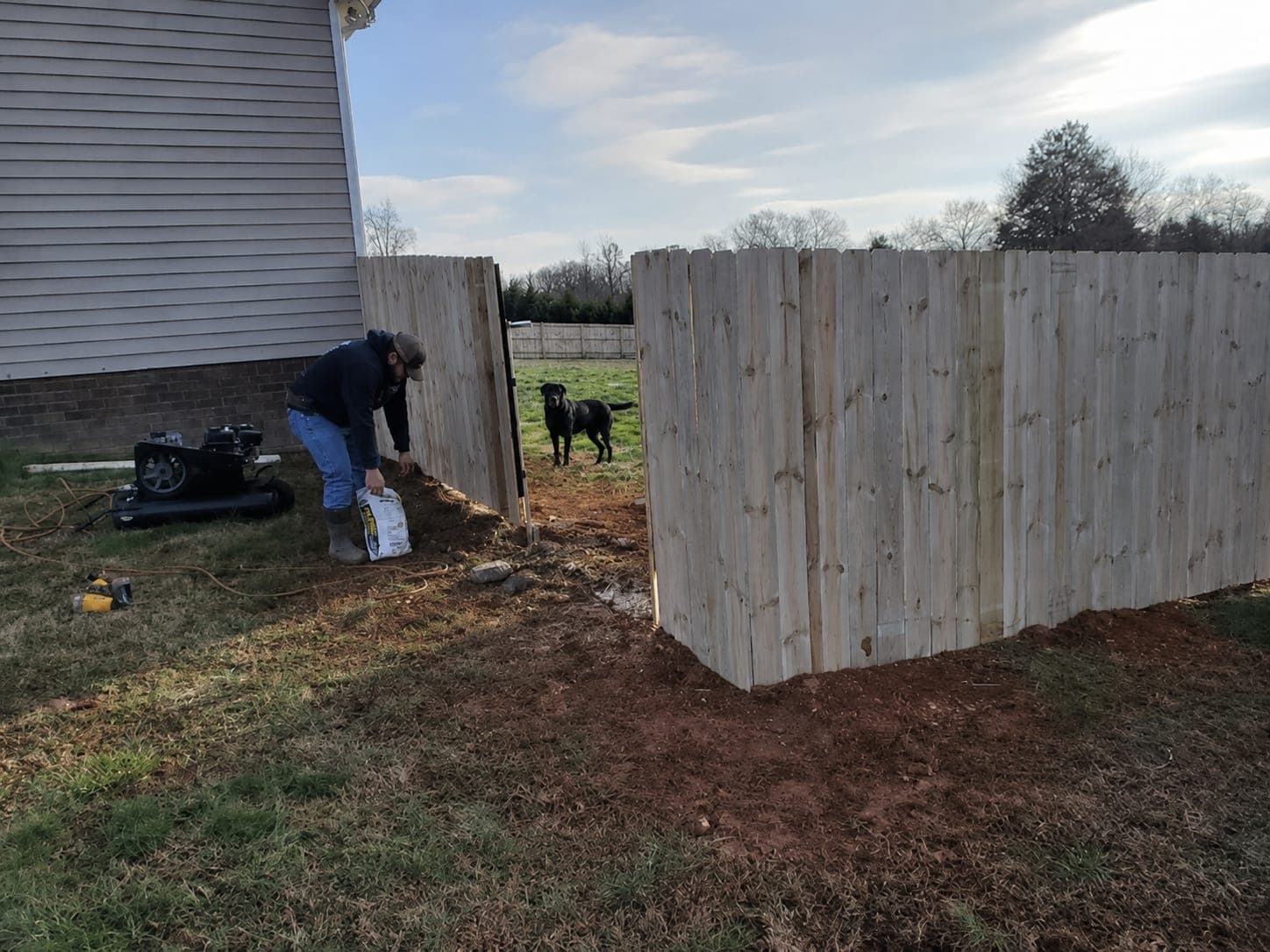
The wrong fence can be climbed, squeezed through, dug under, or destroyed — sometimes in a single afternoon by a determined Lab or Husky.
At Sands Fence Co., we install privacy fences for dog owners across Middle Tennessee and North Alabama every week. Here's what we've learned about what actually works — and what to avoid — when your fence needs to stand up to four-legged residents.
Why Privacy Fences Are the Best Choice for Dogs
Before diving into materials, it's worth understanding why a privacy fence — rather than a chain-link, split-rail, or picket fence — is the right starting point for most dog owners.
- They eliminate the “sight trigger.” Dogs that can see through or over a fence are constantly stimulated by passing people, cars, and animals. That stimulation drives fence-running, barking, and escape attempts. A solid privacy fence removes the visual trigger entirely, resulting in calmer, safer dogs.
- They leave no gaps to squeeze through. Chain-link and picket fences have openings that small and medium dogs can push, squeeze, or chew through. A solid privacy fence provides a continuous barrier with no opportunities for creative escapes.
- They can be built tall. Standard privacy fences install at 6 feet — the recommended height for containing most medium to large breeds. That's a height chain-link and decorative fences rarely reach in residential settings.
- They look great. A well-built privacy fence adds curb appeal and property value — not just a utilitarian pen for your pets.
Best Privacy Fence Materials for Dog Owners
- Wood — good durability, though determined chewers can damage panels over time. Plan to stain or seal every 2–3 years. Best for budget-conscious owners who want a classic look.
- Vinyl / PVC — very good durability with strong resistance to chewing and moisture. Maintenance is minimal beyond an occasional wash. Best for low-maintenance households in humid climates.
- Aluminum / metal — excellent durability that can't be chewed, with very low, rust-resistant upkeep. Best for escape artists and large or powerful breeds.
Wood Privacy Fencing
Cedar and pressure-treated pine are the most common wood choices for privacy fences in Tennessee and Alabama. Wood fences are cost-effective, attractive, and easy to customize in height and style. The main consideration for dog owners: determined chewers can damage wood panels over time, particularly at the base. Pressure-treated lumber is more resistant to moisture and pest damage — important given the humidity levels across both states.
Vinyl / PVC Privacy Fencing
Vinyl is one of the most popular choices for pet owners in our region because it handles Middle Tennessee's weather and North Alabama's humidity exceptionally well. It won't rot, warp, or splinter — and it's highly resistant to chewing. Vinyl privacy fences require almost no maintenance beyond an occasional rinse and hold their appearance for decades. The solid panel construction leaves no footholds for climbing dogs either.
Sands Fence tip
In Middle Tennessee and North Alabama's clay-heavy soils, post installation depth matters enormously for fence longevity. We set our posts deeper than minimum code requirements and use concrete footings — critical for fence stability in areas with seasonal ground movement and heavy rainfall. A fence that leans or shifts creates escape gaps fast.
The Digging Problem — And How to Solve It
A 6-foot privacy fence means nothing to a Beagle, Dachshund, or Terrier who's determined to dig their way under it. Digging is one of the most common fence failure points for dog owners — and one of the most preventable.
- Bury the fence deeper. Standard fence installation sets posts and panels at grade. For active diggers, extending the fence material 6–12 inches below the soil surface adds a below-ground barrier that stops most dogs cold.
- Add an L-footer. An L-footer is a horizontal extension of the fence material that runs underground along the base of the fence, perpendicular to the fence line. Dogs digging at the base hit the barrier within a few inches and give up. It's one of the most effective and least visible dig-prevention solutions available.
- Pour a concrete footer. For serious diggers, a continuous concrete footer along the fence line is the most permanent solution. It eliminates digging entirely and adds structural stability to the fence post installation at the same time.
- Add a gravel border. A 12-inch gravel border along the inside of the fence discourages digging by making the surface uncomfortable and unstable for dogs to work with.
Height: How Tall Does Your Fence Need to Be?
Fence height is non-negotiable when it comes to dog containment — and the right height depends entirely on your breed.
- Small breeds (under 25 lbs) — 4 feet is generally sufficient, though 6 feet is always the safer choice if jumping is a concern.
- Medium breeds (25–60 lbs) — 5–6 feet recommended. Many medium dogs are surprisingly athletic jumpers.
- Large and athletic breeds (60+ lbs, or known jumpers like Huskies, German Shepherds, Belgian Malinois) — 6 feet minimum, no exceptions. Some owners of escape-artist breeds add coyote rollers or inward-angled extensions to prevent climbing.
Don't underestimate your dog
We regularly hear from homeowners who installed a 4-foot fence for a breed that “wasn't a jumper” — until it was. When in doubt, go taller. The cost difference between a 4-foot and 6-foot fence is modest; the cost of a lost dog is incalculable.
Gate Selection for Pet-Safe Yards
A well-built fence with a poorly designed gate is still a liability. For dog owners, gate selection deserves as much attention as the fence itself.
- Self-closing hinges are a must-have for households with dogs. They ensure the gate closes and latches automatically rather than relying on family members — and guests — to remember to close it every time.
- Self-latching hardware that requires deliberate human operation to open prevents dogs from nosing or pawing a gate open. Look for latches that operate from above the gate panel, out of a dog's reach.
- Double-gate systems — two gates with a small airlock space between them — are an increasingly popular choice for dog owners. Even if your dog slips past the first gate, the second gate keeps them contained while you recover the situation.
Frequently Asked Questions
- What is the best type of fence for dogs?
- The best fence for dogs depends on breed size and behavior. Privacy fences — wood or vinyl — are the top choice for most dog owners because they block sightlines that trigger fence-running and barking, provide a solid barrier with no gaps to squeeze through, and can be built tall enough to contain even large breeds.
- How tall should a fence be to keep a dog in?
- For most medium to large breeds, a 6-foot privacy fence is the standard recommendation. Athletic or determined breeds — German Shepherds, Huskies, Belgian Malinois — require a 6-foot minimum. Smaller breeds are typically contained by 4-foot fencing, though 6 feet is the safest universal choice for any household with multiple dogs or unknown jumping ability.
- How do I stop my dog from digging under the fence?
- The most effective solutions include burying the fence 6–12 inches below grade, adding an L-footer (a horizontal underground extension), pouring a concrete footer along the fence line, or adding a gravel border along the inside base of the fence. Your fencing contractor can recommend the right approach based on your soil type and your dog's digging behavior.
- Is vinyl or wood better for a dog fence?
- Vinyl is generally the better long-term choice for dog owners — it's resistant to chewing, moisture, and splintering, and requires almost no maintenance. Wood is a solid budget-friendly option but may require repairs over time if your dog is a chewer. In Middle Tennessee and North Alabama's humid climate, vinyl also holds up better than wood over the long term.
- Can dogs climb privacy fences?
- Some athletic breeds can climb chain-link fencing easily, but solid privacy fences provide no footholds for climbing. A solid-panel wood or vinyl privacy fence at 6 feet is extremely difficult for even large, athletic dogs to scale. If climbing is a concern, inward-angling fence extensions or coyote rollers can be added as an extra deterrent.
- What fence gate features are best for dog owners?
- Self-closing hinges, self-latching hardware positioned out of a dog's reach, and double-gate airlock systems are the top features for pet-safe yards. These features prevent accidental escapes caused by gates left open or pushed open by dogs.
- Does Sands Fence Co. install dog-safe fences in Tennessee and Alabama?
- Yes. Sands Fence Co. installs custom privacy fences for pet owners in Middle Tennessee and North Alabama. Contact us to confirm we service your area and to schedule a free consultation.